


You will not be allowed to compare more than 4 products at a time
View compareOticon More miniRITE - T
Oticon More miniRITE - T
Regular price
$3,005.00
$3,005.00
$4,005.00
-24%

Unit price
per
Shipping calculated at checkout.
Standard Delivery
⏰ Order today within
to get discounted price
🚚 Delivery from
to
Ordered
Shipped
Delivered
↓
Couldn't load pickup availability


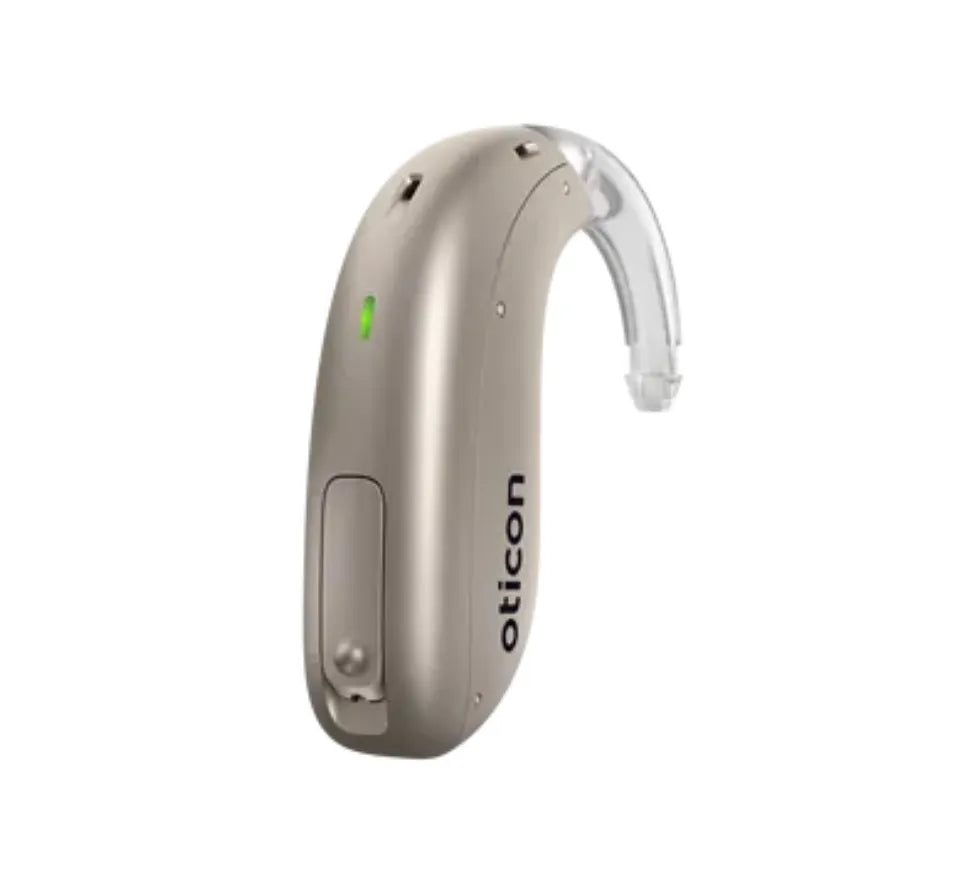
Oticon More miniRITE T: The Hearing Aid That Changed What the Brain Actually Needs to Hear
Oticon has been changing lives through better hearing since 1904, and across more than a century of doing so, there have been moments that did not just improve the technology but changed the thinking behind it entirely. The carbon fibre hearing aid. The first in-the-ear device. The first hearing aid with an internet connection. Each of those moments shared something that still defines the way Oticon works: a refusal to accept that the best available answer is good enough if a better question has not yet been asked.
The Oticon More miniRITE T is one of those moments. And unlike many advances in hearing technology that promise more than they deliver, this one holds up when it matters. In the situations that hearing aids have always struggled with most, in the noise, in the crowd, at the dinner table where four conversations are happening at once, the people who wear it describe something that sounds almost too simple to be true. They can just hear. Not strain to hear. Not manage hearing. Just hear. That is what happens when a device is built around how the brain processes sound rather than how an engineer might wish sound behaved.
A Brand That Has Always Started With the Brain
Oticon today is part of the William Demant Group, one of the world's most respected hearing care organisations, with devices worn by millions of people in countries across every continent. But the philosophy that produced the More miniRITE T is older than any product line: the belief that hearing is not a matter of the ear alone, and that treating it as such has always been the wrong starting point.
For decades, hearing aids operated on a principle of noise reduction. Identify the noise. Suppress it. Keep the speech. It was a logical approach, and it worked, partially. But it was built on an assumption that turned out to be incomplete: the assumption that the brain needed a cleaned-up, simplified signal to work with. Oticon's researchers found that the opposite was closer to the truth. The brain does not need less information. It needs more of it, delivered in a way it can actually use.
The Oticon More miniRITE T was built on that insight. Instead of reducing the sound environment to make it easier for the hearing aid to process, it opens it up. It gives the brain the full acoustic scene, with speech and context and spatial cues all intact, and trusts the brain to do what it has always done: make sense of the world through sound.
Detailed Benefits of Oticon More miniRITE T
BrainHearing Technology: Built Around How You Actually Hear
The feature that defines the More miniRITE T is not a noise reduction algorithm. It is a philosophy given form in hardware and software. BrainHearing technology is Oticon's recognition that the auditory brain is not a passive receiver waiting to be fed processed signals. It is an active, sophisticated system that extracts meaning from complexity, reads spatial cues, separates competing voices, and builds a coherent picture of the acoustic world in real time.
Traditional hearing aids interrupt that process. By narrowing the sound field, suppressing peripheral sounds, and delivering a stripped-back signal, they force the brain to work with less than it needs. The result is speech that is technically audible but cognitively demanding, because the context and spatial information the brain uses to orient itself have been filtered away.
The More miniRITE T gives the brain what it actually needs. It delivers a full, rich sound scene with the spatial integrity intact, so the brain can do its own work. Studies conducted by Oticon showed that this approach produces 30 per cent better speech understanding and reduces the mental effort of listening by 20 per cent compared to traditional noise-reduction approaches. The brain is not working harder. It is working less, because it has the information it needs to work the way it was designed to.
The Deep Neural Network: How the More Learned to Hear Like a Human
The Oticon More miniRITE T was the first hearing aid in the world to be built on a deep neural network trained on real-world sound. This is not a feature added to an existing architecture. It is the foundation of the device. The neural network inside the More was trained on twelve million real-world sound scenes, covering the full range of acoustic environments a person actually encounters across a life, quiet rooms, busy restaurants, traffic, music, overlapping conversations, outdoor spaces, reverberant halls.
What that training produced is a device that does not rely on rules. It recognises. When it encounters a sound environment, it does not apply a fixed filter. It draws on twelve million examples of what that environment sounds like and responds accordingly, in real time, continuously, as the world around the wearer changes.
The result is sound processing that feels organic rather than mechanical. Users consistently describe the sound of the More miniRITE T as natural in a way that previous hearing aids, including very good ones, were not. The device is not shaping the sound to fit a template. It is responding to the sound as it actually is, because it has learned what real-world sound actually sounds like.
Reduced Listening Effort: The Difference You Feel by Evening
Everyone who has lived with hearing loss knows the tiredness that comes not from physical effort but from the constant, grinding cognitive work of trying to follow the world through a hearing aid that delivers just enough to understand, most of the time, with enough effort. The tiredness of filling in gaps. The tiredness of reconstructing sentences. The tiredness of concentrating so hard on listening that the enjoyment of being somewhere has long since drained away.
Oticon's research demonstrated that the More miniRITE T reduces the cognitive load of listening by 20 per cent compared to conventional hearing aid approaches. That number translates into something very specific in real life. People who wear the More miniRITE T describe coming home from social events and not feeling hollowed out. They describe staying in conversations longer. They describe being able to split their attention between listening and thinking about what to say, which is how conversation is supposed to work, rather than spending all available mental energy just on following what is being said.
That reduction in cognitive load, accumulated across a full day of listening, is one of the most meaningful things a hearing aid can deliver. It is also one of the least visible in a specification sheet.
OpenSound Navigator: Hearing the Whole Room Without Losing the Thread
The Oticon More miniRITE T uses OpenSound Navigator, the processing engine that makes BrainHearing possible in real time. OpenSound Navigator continuously analyses the full sound environment, one hundred times per second, building an acoustic map of what is happening around the wearer and making micro-adjustments to ensure that speech is accessible from every direction simultaneously.
This is the practical expression of Oticon's brain-based approach. Rather than locking the wearer into a forward-facing beam and letting everything else fade, OpenSound Navigator keeps the full acoustic scene available while giving the brain the contrast and clarity it needs to locate and follow speech wherever it is coming from. In a group conversation at a restaurant, where voices are arriving from three directions and background noise is arriving from several more, OpenSound Navigator does not choose a direction. It manages the whole room.
The 360-degree access to sound that this creates is not just more comfortable. It is functionally different from directional processing, because it matches the way the brain expects to hear. The brain evolved to work with a full spatial soundscape. OpenSound Navigator delivers one.
OpenSound Booster: Turning It Up When the Room Gets Harder
There are moments when even a full acoustic scene becomes overwhelming. When the restaurant is genuinely loud. When a large group is talking simultaneously. When the acoustic environment is not just complex but demanding enough that some additional intervention would help.
The More miniRITE T includes OpenSound Booster for exactly those moments. Activated through the Oticon ON app or directly on the device, OpenSound Booster applies additional directional focus and noise management on demand, giving the wearer a tool for the most challenging situations without changing the default philosophy of open, brain-friendly sound for everything else. It is there when needed and invisible when it is not.
Telecoil: The Feature That Opens Doors Others Cannot
The miniRITE T carries something the miniRITE R does not: a built-in telecoil. And for a significant number of people in a significant number of situations, that single difference is the one that matters most.
A telecoil is a small coil of wire inside the hearing aid that picks up electromagnetic signals directly, bypassing the microphone entirely. It was designed for use with loop systems, the induction loop technology installed in theatres, cinemas, places of worship, banks, airports, GP surgeries, and public venues across much of the world, and it turns those spaces from difficult listening environments into clear, direct ones. When the venue has a loop and the hearing aid has a telecoil, the speaker's voice arrives in the hearing aid without the room noise, without the distance, without any of the acoustic compromises that make public speaking events so exhausting for people with hearing loss.
For people who attend church regularly. For people who go to the theatre or the cinema. For people who use hearing loops at bank counters or information desks. For people who travel through airports and rely on public address systems. For all of these people, the telecoil in the More miniRITE T is not a secondary feature. It is the primary reason to choose this device over its rechargeable sibling.
The T in miniRITE T stands for telecoil. It is there because Oticon understood that for a meaningful proportion of people with hearing loss, the world has already built infrastructure to help them hear, and the hearing aid should be able to use it.
Traditional Battery Confidence for Those Who Want It
The More miniRITE T uses disposable zinc-air batteries rather than a built-in rechargeable system, and for many wearers that is not a compromise but a preference. Zinc-air batteries are available everywhere. A spare set fits in a pocket, a wallet, a handbag, a drawer at the office. There is no charger to carry on a trip. There is no cable to forget. There is no single point of failure that leaves someone without hearing aids because the charging case was left at home.
For people who travel extensively and cannot always guarantee access to a power source. For people who work unpredictable hours and cannot rely on a consistent overnight charging routine. For people who simply prefer the control and flexibility of being able to replace a battery anywhere in the world with a component that costs almost nothing and is sold in every pharmacy, the miniRITE T battery system is the right answer.
Size 312 batteries power the More miniRITE T, delivering reliable performance across a range of use patterns. The battery door is straightforward to operate. Battery life varies with use, particularly with streaming, but the solution to a low battery is immediate and available wherever the wearer happens to be.
Connectivity That Disappears Into the Routine
The Oticon More miniRITE T connects directly to iPhone via Made for iPhone technology, streaming audio from calls, music, podcasts, and video directly into both ears in clear stereo. Android connectivity is available through the Oticon ConnectClip, which also functions as a remote microphone and a hands-free phone interface for Android users.
The Oticon ON app provides full personal control over volume, programs, and sound preferences, and works in combination with a tinnitus sound support library for wearers who also manage tinnitus alongside hearing loss. Remote programming through the app enables a hearing care professional to make fine-tuning adjustments without requiring the wearer to come into the clinic, which is a practical benefit that people who have spent years making clinic appointments for small adjustments appreciate immediately.
The TV Adapter connects to a television and streams audio directly to the hearing aids at broadcast quality. Oticon's EduMic and remote microphone accessories extend the reach of the device into classrooms, meeting rooms, and any environment where a direct signal would help.
SpeechGuard LX: Holding the Voice Together When Noise Gets Loud
One of the specific things that noise does to hearing aid performance is not just obscure speech but distort the temporal and spectral structure of it. The characteristics that make one voice different from another, and that make speech intelligible rather than merely audible, are fragile in noise, and many hearing aids sacrifice them in the process of trying to manage the acoustic environment.
SpeechGuard LX, the processing feature in the More miniRITE T that preserves the natural character of speech in challenging conditions, was designed to protect those characteristics. It maintains the contrasts between speech sounds that allow the brain to distinguish words correctly even when background noise is significant. The result is not just that speech is louder. It is that speech remains recognisably itself, with the natural variation and rhythm intact, which is what makes it intelligible rather than just audible.
This distinction matters most in exactly the situations where hearing loss matters most: the noisy restaurant, the family gathering, the work meeting where the acoustic environment is imperfect and the stakes of mishearing are real.
IP68 Protection for Daily Durability
The Oticon More miniRITE T is rated IP68, meaning it is dust-tight and resilient against water exposure in the conditions of daily life. Sweat, rain, the humidity of an active day, the occasional moment of unexpected moisture: the More miniRITE T handles all of it without requiring the wearer to treat it as something fragile.
The wax protection system guards the receiver from earwax ingress, which is one of the most common causes of hearing aid performance degradation over time. It is designed for straightforward replacement at home, keeping maintenance simple and keeping performance consistent between professional service appointments. Oticon's build quality reflects the expectation that a hearing aid is worn every waking hour for years, and the More miniRITE T is built accordingly.
Advanced Technology Behind the Oticon More miniRITE T
The Oticon More miniRITE T brings together a technology architecture built around a single coherent philosophy: give the brain what it needs to hear naturally. The deep neural network trained on twelve million real-world sound scenes forms the foundation of all processing decisions. OpenSound Navigator analyses the acoustic environment one hundred times per second and manages the full 360-degree sound scene in real time. BrainHearing technology delivers the full acoustic scene with spatial integrity intact so the brain can extract meaning the way it was designed to. SpeechGuard LX preserves the natural character and temporal structure of speech in noise. OpenSound Booster provides demand-activated directional focus for the most challenging acoustic moments. The built-in telecoil connects the wearer directly to loop systems in public venues, theatres, places of worship, and anywhere induction loop infrastructure is installed. Size 312 zinc-air batteries provide reliable power with global availability. Made for iPhone direct streaming delivers audio in stereo to both ears without an intermediate device. The Oticon ON app provides personal control and remote professional fine-tuning. Tinnitus sound support is built into the app for wearers who manage both hearing loss and tinnitus. IP68 waterproofing protects the device across the full range of real-world conditions. All of this operates simultaneously, continuously, and invisibly while the wearer lives their life.
Design, Style, and Comfort
The More miniRITE T sits behind the ear in the receiver-in-canal configuration, with the receiver in the ear canal and the main body sitting discreetly and naturally against the head. The battery door is located at the base of the device and opens cleanly for straightforward battery changes. The profile is slim enough that most wearers describe being unaware of the device within the first week of wearing it.
The device is available in a range of colours designed to complement different skin tones and hair colours rather than draw attention. The push button on the body handles volume and program changes directly. The Oticon ON app handles everything else. The overall experience of wearing the More miniRITE T is one of the device quietly serving the wearer rather than the wearer actively managing the device, which is the relationship the design was built to create.
Who the Oticon More miniRITE T Is Ideal For
The Oticon More miniRITE T was built for people who want everything the More platform delivers and need either a telecoil or the flexibility of a traditional battery system, or both.
It is ideal for people who regularly use loop systems in public venues, places of worship, theatres, or service counters and want the direct, clear connection that only a telecoil provides. For people who travel frequently and prefer the freedom of a battery they can replace anywhere in the world. For people who work irregular hours or have routines that make overnight charging unreliable. For socially active people who want to be genuinely present in conversations rather than managing their way through them. For anyone who has spent years being careful about where they sit and which way they face, and who would like to stop doing that.
It suits mild to severe hearing loss. The combination of brain-based processing, deep neural network learning, open sound philosophy, and telecoil access makes the More miniRITE T one of the most versatile hearing experiences available, particularly for people whose lives regularly take them into public venues with loop infrastructure.
Sound Performance and the Listening Experience
Oticon More was awarded the CES Innovation Award on its launch and received consistent recognition from independent audiology reviewers for the step change it represented in real-world speech understanding. The deep neural network, the BrainHearing philosophy, and the OpenSound Navigator processing together produce a listening experience that users and clinicians consistently describe not as better than what came before but as different in kind.
The measure that matters most is not a laboratory result. It is what happens when a person wearing the More miniRITE T walks into the kind of environment that used to defeat them. The restaurant they stopped going to. The church service they stopped following. The theatre performance they stopped attending. The family gathering they stopped enjoying. What happens, consistently, is that they discover it is not as hard as it used to be, and sometimes it is not hard at all. That is the sound performance of the Oticon More miniRITE T, and no decibel figure captures it.
Long-Term Impact on Quality of Life
Oticon's foundational research has demonstrated the connection between hearing, brain health, and quality of life for decades. The brain that is not spending its resources compensating for inadequate auditory input has those resources available for memory, for cognition, for engagement, for all the things that make social and professional life meaningful. Hearing loss that goes unaddressed or inadequately addressed does not just make the world quieter. It makes it smaller.
The Oticon More miniRITE T addresses this by treating the brain as the organ of hearing that it actually is. By giving it the full, rich acoustic scene it needs rather than the simplified, processed signal that hearing aids have historically delivered, it changes the relationship between the wearer and their acoustic world. Over time, less cognitive load, better speech understanding, greater social confidence, and more effortless participation in conversations accumulate into something that research supports and that wearers describe in very simple terms: they feel more like themselves.
Rediscover What Truly Natural Hearing Feels Like
The Oticon More miniRITE T is not an incremental improvement on what hearing aids have always done. It is a different answer to the question of what a hearing aid should do at all. The deep neural network. BrainHearing technology. OpenSound Navigator. A telecoil that opens every looped venue in the world. A battery system that works anywhere, anytime, without a charger in sight. Connectivity that disappears into the background of a connected life. All of it built around a single idea: that the brain already knows how to hear, and the job of the hearing aid is to give it what it needs to do so.
Schedule a professional hearing evaluation and ask specifically about the Oticon More miniRITE T. Wear it in the environments where hearing has always been the hardest. Sit in the looped venue that used to exhaust you. Follow the conversation in the restaurant that used to defeat you. Because the real measure of this device is not what a specification sheet says about it. It is what happens the first time you sit in a theatre, hear every word clearly from the loop, and realise at the end of the performance that you followed the whole thing.
That moment is what the Oticon More miniRITE T was built to give back to you.
Get Free Consultation
Still Confused? Find Your Answers Here-
Which hearing aid brand is best: Phonak or Starkey?
Both Phonak and Starkey offer premium sound quality and smart features. Phonak is known for natural hearing performance, while Starkey focuses more on AI-powered speech clarity and health features.
Are modern hearing aids Bluetooth compatible?
Yes, most modern hearing aids support Bluetooth connectivity for streaming calls, TV audio, and music directly from smartphones and other devices.
Which hearing aids are better for speech clarity in noise?
Both brands perform well in noisy environments. Phonak offers adaptive sound balancing, while Starkey provides AI-based speech enhancement.
Are rechargeable hearing aids worth buying?
Rechargeable hearing aids are convenient for daily use as they eliminate the need for frequent battery changes and provide all-day performance.
Can I buy hearing aids online?
Yes, you can compare models, features, and prices online before choosing the right hearing aid for your hearing needs and budget.
Where can I get expert guidance for hearing aids?
You can visit Ear Solutions for expert hearing tests, hearing aid trials, and personalised recommendations.